
When you go to work each day, your faith comes with you. It shapes the way you dress, the days you observe, and the values you carry into every room you walk into. When your employer starts treating you differently because of it, that is religious discrimination, and in California, it carries a weight that goes far beyond ordinary workplace stress.
Sound Familiar?
- Denied your time off request
- Told you to remove your hijab or turban
- Made comments about your beliefs, or looked the other way while coworkers did

★★★★★5/5
“A great law firm I would highly recommend to anyone my case was settled with so much compassion and nothing was hidden they were very upfront from being to end.”
— Recent Client Review
Quick Answer
Is religious discrimination at work illegal in California?
Religious discrimination at work is illegal in California under the California Fair Employment and Housing Act (FEHA) and Title VII of the Civil Rights Act of 1964. Your employer cannot treat you worse because of your religion, your beliefs, or your religious dress and grooming. They also cannot refuse to reasonably accommodate your faith after you make a formal request. If any of this is happening to you, you may have a legal claim worth pursuing.
10,000
+
Workers Helped
100
M+
Recovered
10
+
Years in Practice
What Does California Law Actually Cover?
California’s FEHA is broader than federal law in two important ways. First, it applies to employers with five or more employees, while Title VII generally requires at least fifteen. Second, it protects a wider range of beliefs. FEHA covers any sincerely held religious, ethical, or moral belief, whether you belong to an organized faith or not. Atheists, agnostics, converts, and job applicants are all protected, not just current employees. Treating someone differently because of a particular religion is one of the most clearly prohibited practices under California employment law.
California Law Gives You Stronger Protections Than Federal Law
California’s Workplace Religious Freedom Act of 2012 specifically protects religious dress and grooming. Your employer cannot treat your hijab, turban, yarmulke, cross, kufi, tichel, or beard as a uniform violation. California also holds employers to a higher standard on undue hardship. They must prove a substantial burden before denying an accommodation request, not just a minor inconvenience. The federal bar moved closer to California’s after the Supreme Court’s ruling in Groff v. DeJoy (2023), but California has always set the higher floor.
California is an at-will employment state, which means most employees can be terminated or choose to leave for almost any reason. At-will employment carries real limits, though, and those limits are exactly where constructive discharge claims live. An employer cannot use at-will status to push out an employee because of their race, sex, age, pregnancy, disability, or national origin, or to retaliate against someone who filed a discrimination complaint or reported a safety violation. When an employer tries to accomplish an unlawful termination through intolerable working conditions rather than a formal notice, constructive discharge is the doctrine that holds them accountable.

Signs of Religious Discrimination at Work
Most employees who contact Frontier Law Center describe a feeling that something is wrong before they can name exactly what it is. Here are the most common forms of religious discrimination in California that Frontier Law Center sees.
If any of these patterns match your experience, you may have a claim under FEHA, Title VII, or both. You do not need a perfect paper trail. You need what actually happened, and Frontier Law Center can help you assess what it means.
You don’t need to have all the answers.
You just need to tell us your story. We’ll figure out if it was illegal. Many of our most successful clients started by
saying “I’m not even sure I have a case.”
- Failure to accommodate: Your employer refuses to adjust your schedule, dress rules, or duties to let you observe your faith without a valid reason
- Dress and grooming rules: You are told to remove your hijab, turban, yarmulke, cross, or beard worn for religious reasons
- Disparate treatment: You are passed over for promotion, given worse shifts, or disciplined for conduct that other employees are never disciplined for
- Religious harassment: Slurs, mocking comments, or repeated jokes about your faith that management allows to continue without addressing them
- Coerced participation: You are pressured to attend prayer, Bible study, or religious events that feel tied to your job standing or performance review
- Retaliation: You are fired, demoted, or disciplined shortly after requesting a religious accommodation or reporting harassment to HR
Your Right to a Religious Accommodation in California
Your employer has a legal duty to reasonably accommodate your sincerely held religious beliefs and practices. The only exception is a genuine undue hardship. That duty is active. Your employer must engage with your request through a good-faith interactive process. They cannot say no and walk away. If your employer refuses to engage at all, that refusal can itself be evidence of a FEHA violation.

What Qualifies as a Reasonable Accommodation
A reasonable accommodation lets you observe your faith without preventing you from doing the essential functions of your job. Common examples include a schedule change for the sabbath or a religious holiday. It can also mean permission to wear religious clothing or maintain a religious grooming practice. A brief daily prayer break or an exemption from a non-essential grooming rule can qualify too.

What Undue Hardship Actually Means in California
Employers often use undue hardship as a quick refusal. Under California law, it requires proof of a significant difficulty or expense. Scheduling friction, another employee covering a shift, or a blanket “no exceptions” policy rarely clears that bar. If your employer denied your request with a vague reason, ask for the specific explanation in writing. Then contact Frontier Law Center before accepting that denial as final.
Steps to Take While You Decide What to Do
Taking action early protects your rights. It also gives Frontier Law Center more to work with when reviewing your situation.
| Step | What to Do and Why It Matters |
|---|---|
| Document everything | Write down what happened, who was present, when it occurred, and exactly what was said. Do this as close to the event as possible. Save emails, texts, and schedules somewhere outside your work accounts. |
| Request accommodation in writing | Put your accommodation request in a written email or message. Be specific about what you need and why your religion requires it. Written requests create a record that verbal ones cannot. |
| Do not sign anything yet | Some employers move quickly after a complaint. They may present a severance agreement, an arbitration clause, or an NDA. Signing can waive rights you did not know you had. Contact Frontier Law Center before you sign anything. |
| Get a free case evaluation | Consultations with Frontier Law Center are free and confidential. If you have a claim, we will tell you clearly. If you do not, we will tell you that too. Either way, you leave knowing where you stand. |
How Long You Have to File a Religious Discrimination Claim in California
A religious discrimination claim in California has firm filing deadlines. These keep running whether or not you feel ready to act. Missing them can permanently close the door on your options. The earlier you contact Frontier Law Center, the more paths remain available to you.
File With the California Civil Rights Department (CRD)
California gives you three years from the last adverse action to file a religious discrimination complaint with the California Civil Rights Department (CRD). This is the state agency that enforces FEHA. Filing here is typically the first step before you can bring a lawsuit in California court.
File a Charge With the EEOC
If you want to pursue a federal claim under Title VII, you have 300 days from the adverse action to file a charge with the Equal Employment Opportunity Commission (EEOC). California’s work-sharing agreement between the CRD and EEOC means a complaint filed with one agency is typically cross-filed with the other automatically.
File a Civil Lawsuit in California Superior Court
To sue in court, you generally need a right-to-sue letter from the CRD first. Once you have it, you have one year to file your lawsuit. Do not wait to request that letter. The clock starts when it is issued, not when you decide you are ready.
When Religious Discrimination Goes Beyond a Single Incident
Sometimes the harm does not stop at one denied request or one uncomfortable conversation. Religious discrimination at work can escalate into ongoing harassment or cost you your job entirely. Both situations carry their own legal weight under California law.
Religious Harassment and a Hostile Work Environment
Ongoing jokes about your faith, a supervisor who repeatedly dismisses your beliefs, and coworkers who mock your religion can add up to a hostile work environment under FEHA. A single offensive comment may not clear the legal threshold, but a pattern that management ignores usually does. California law holds your employer accountable for supervisor conduct. It also holds them responsible when a coworker or client harasses you and management knew about it and failed to respond.
Religious Discrimination and Wrongful Termination
Losing your job because of your religion can create a wrongful termination claim on top of the discrimination claim. Damages can stack. California is an at-will state, but at-will does not let your employer fire you for an illegal reason. Terminating you for your religion or for requesting a religious accommodation violates both FEHA and Title VII. Religion-based retaliation, such as being demoted or pushed out after an accommodation request, can add another layer of recovery. If retaliation is part of your situation, Frontier Law Center will account for it. Potential damages include back pay, future lost earnings, emotional distress damages, punitive damages, and attorney’s fees.

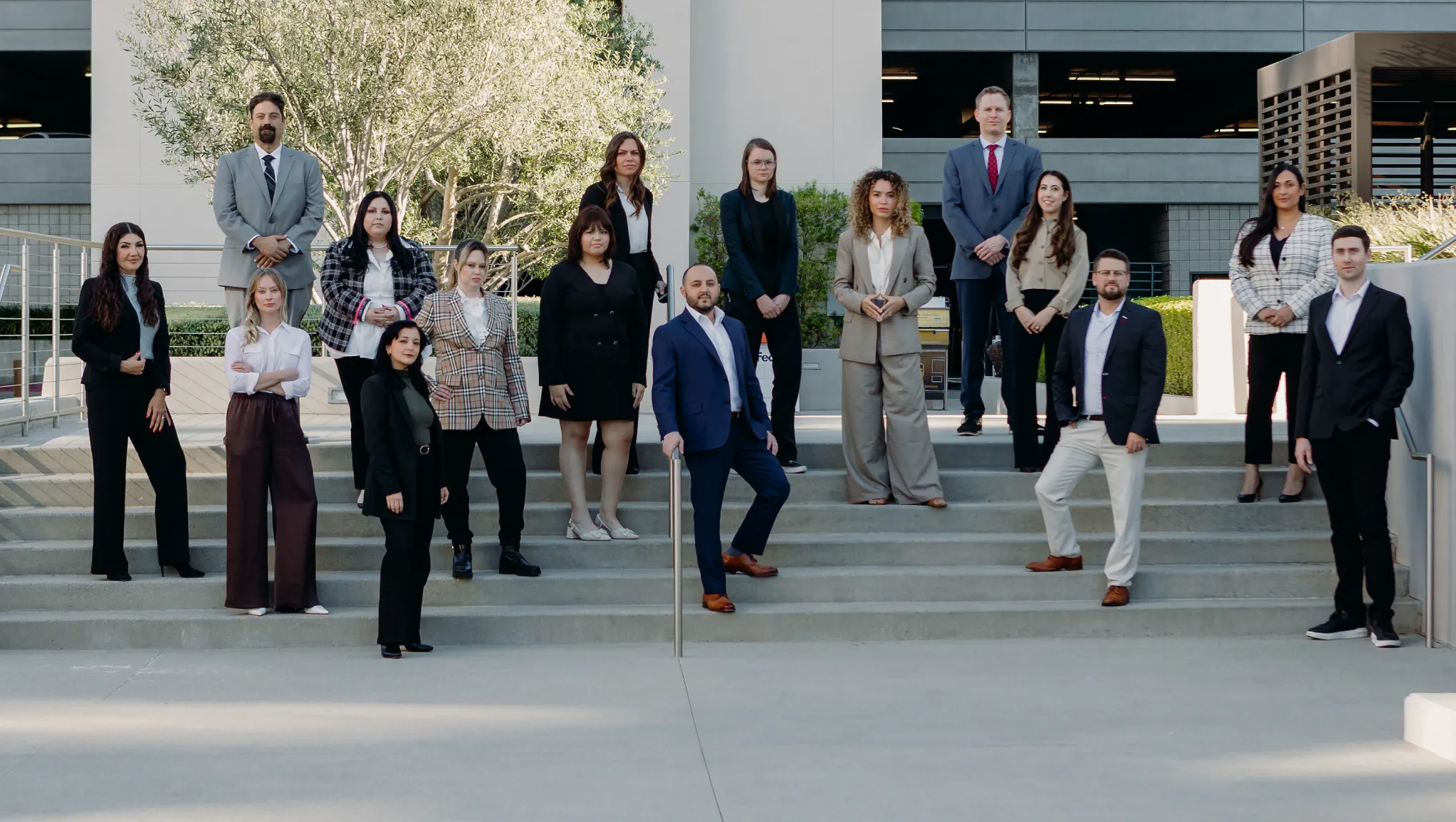
1
Kirsten Starr
Controller
2
Nicole Clancy
Senior Litigation Attorney
3
Mike Rachmann
Litigation Attorney
4
Robert Starr
Attorney, Founding Partner
5
Francine Barlavi
Client Onboarding Team
6
Danny Barlavi
Client Onboarding Team Lead
7
Kaylie Urango
Pre-Litigation Support Specialist
8
Amber Shelgren
Case Evaluation Assistant
9
Taylor McCarthy
Litigation Support Specialist
10
Gabriela Dominguez
Litigation Support Specialist
11
Cynthia Rodriguez
Case Manager
12
Collette Navasartian
Paralegal
13
Rebecca Harteker
Litigation Attorney
14
Manny Starr
Attorney, Managing Partner
15
Colin Rickard
Director of Growth & Operations
16
Mark Tieman
Attorney, Managing Partner
We’re on Your Side. Only Your Side.

100% Plaintiff-Side Practice
We never represent employers. Every resource, every strategy is dedicated to helping employees like you win.

We Actually Listen
Many firms rush through consultations. We take time to understand your full story — because details that seem small can be decisive.

California Specialists
California has the most powerful employee protection laws in the country. We know them deeply and use every one to your advantage.
Our Commitment to You
We never represent employers. Every resource, every strategy is dedicated to helping employees like you win.
100%
Confidential
No Fee
Unless we win
How Frontier Law Center Fights For You
California law provides strong employee protections. Does any of this match what you experienced?
1
You Share Your Story
Free, confidential, no pressure. We listen — and we give you an honest answer about your rights.
2
We Investigate
Our attorneys uncover what actually happened. You don’t lift a finger — we do the work.
3
We Fight for You
We negotiate hard and are fully prepared to go to trial. We fight for the maximum recovery.
4
You Move Forward
We only get paid when you win. You get closure, compensation, and a fresh start.
Frequently Asked Questions: Religious Discrimination in California
California employees ask Frontier Law Center the questions below most often before deciding whether to move forward. Each answer gives you a clear starting point.
Does California Law Protect Non-Mainstream and Independent Beliefs?
California law protects every sincerely held religious belief under both FEHA and Title VII. Your employer cannot favor or penalize you because of a particular religion, and they cannot decide whether your faith is legitimate enough to qualify for protection. California also covers ethical and moral beliefs held with the strength of religious conviction. That protection applies even when those beliefs fall outside any organized tradition or denomination.
Do I Need to Belong to an Organized Religion to Have Legal Rights at Work?
California and federal law do not require membership in any church, mosque, temple, or institution. FEHA protects independent believers, converts, and employees whose practices fall outside a recognized structure. What matters legally is that you sincerely hold the belief, not that any institution has sanctioned it.
Can My Employer Deny My Accommodation Request by Claiming Undue Hardship?
Your employer must demonstrate a real and significant burden to legally deny your accommodation request. Minor scheduling friction, a preference for uniform appearance, or a blanket policy against exceptions rarely satisfies that standard under California law. If your employer rejected your request without a clear explanation, ask for the specific reason in writing. Then contact Frontier Law Center before you accept that denial as final.
How Do I Prove My Employer Discriminated Against Me Because of My Religion?
To prove religious discrimination in California, you need to establish three things: that you hold a sincerely held religious belief, that your employer took an adverse action against you, and that your religion motivated that decision. You do not need a direct admission from your employer. Strong evidence includes timing, such as an adverse action shortly after an accommodation request. It also includes records showing your employer treated you differently than employees without a visible religious identity, denied accommodation paperwork, and written communications that reference your faith. Frontier Law Center reviews the full picture to identify which evidence carries the most weight.
What If My Employer Told Me to Remove My Hijab, Turban, Cross, or Yarmulke?
California’s Workplace Religious Freedom Act of 2012 explicitly protects religious dress and grooming. Your employer can restrict religious attire only if accommodating it creates a genuine and substantial hardship. A generic uniform policy, a manager’s personal preference, or a vague customer-image concern does not meet that standard. If your employer told you to remove or conceal religious clothing, contact Frontier Law Center to find out whether they broke the law.
Last Updated: June 01, 2026
The information on this page reflects the law as of the date above and is intended for general informational purposes only. It does not constitute legal advice, nor does it create an attorney-client relationship. Laws and regulations are subject to change, and individual circumstances vary — always consult a qualified attorney for guidance specific to your situation.
Talk to Frontier Law Center for Free
Your faith should never cost you your sense of belonging at work or put your livelihood at risk. A free conversation with Frontier Law Center can tell you whether what you are experiencing is illegal, how much time you have to act, and what your realistic options look like.
Deadlines under FEHA and Title VII keep running whether or not you are ready. Reaching out today keeps your options open.